
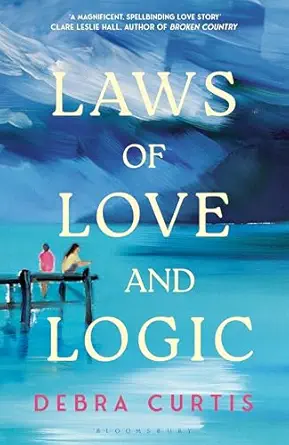
Book Review and Critique By Harsimran Kaur | Rating: 4/5
In the glimpses of such illusions that I often wander to, ‘love’ is an altruist. Isn’t there something comforting about it? It’s a bit quixotic at time, and in its melodramatic scalar, it carries the pleasure of allegories.
I often think why ‘love’ is in despair, deranges, and if it does conjure a deceit, a disbelief, how do I then separate illusion from reality when all I did is to love. So, does love become an exhibitionist? And in such parlance, does it attitudinize, in fortissimo, and in such constancy loses faith, or is so hapless that it brings in human discontentment, grief, composed in pianissimo?
I humbly ask, can ‘love’ be disembodied? Do I call ‘love’, a matter or a particle that exist in isolation? If that is the case, then there would be nothing to free oneself of, and the body will perish without ‘love’ in nothingness. What would then become of us? Mere physical mortals without any conflict, lying in apostasy, and the very reason ‘love’ exist is because it is a belief and without love, lying isolated somewhere like an apparition, the mortal of the ‘self’ will call such a ghost as a disturbing similitude.
But I often see the duality of ‘love’ seep inside me. Can it ever be disintegrated?
If you find the above philosophy arresting, then it’s time to disinter the distinctive appearance & texture of ‘love’ in the book, ‘Laws of Love and Logic’ by Debra Curtis.
Lily has a profound love for the boy. It all starts sweet and sentimental. For Lily, love is a sanctuary; nothing dystopian. There is a magical youthfulness where everything is palatable, and there is this relentless desire to get transported into the future with a set of beliefs & such buoyance where the trajectory of negotiations and forbearance is an objectified simulacrum of self-restraint.
Are we all ready for this? Doesn’t the obligations of youth fence on a precocious tilt of axis? Do we ever think of such rotational verity going wrong? ‘Love’, as I said, is an illusionist.
Lily and the boy part ways. The future dies under the imminent vanishing of the present. There is a complete emptying of a desire; the displeasures of life become a ventriloquist, a susurrus muttering of uncertainty. But what happens to the love between Lily and the boy? Does it really slip under the guilt, serrated often, as the boy is apprehended for a crime, imprisoned, and Lily continues the mysteries of life with another man whom she gets married to.
And if I may ask now if love is a sedulous devotion? Can it be acrimoniously bitten in the skin? Doesn’t ‘love’ prevail even though it does not exist; has been abandoned by perils of human ambivalence and what would be the concurrence if that ‘love’ were to come back? What made it atrophied?
‘Love’ with the boy was ordained and so was lily’s marriage to Marshall. From the youthful semblance in Rhode Island to the adult adventures in New York, Lily still found some parts of her, fragile, carried in depths of no closure; fragility like that of the bird flapping, and through such observance, she felt like a bird, of a kind to be easily torn, not the wings but the aching heart that fluttered in guilt. It was a life with Marshall, uncomprehended, in his vast carapace of attending to birds, insects, trees, shrubs and then Lily imperceptibly accepted what a nice man and an ornithologist he was.
But Lily carries grief; grief of mutilated desires but from that grief rises an edification of resting the life on divisibility of emotions, multiplication of characters, and thus Lily makes a life of that guilt, but still guilt remains untethered.
And what would be a loss? Is it only about grieving, grief, or the grief-stricken? Often, such grieving becomes contemporaneous to the breaths that we inhale-exhale, indisreputable, and a deep sigh here & there, and then in this grief what becomes of life? A delusion, disruption and often rests as a dilemma of what next?
Laws of Love and Logic by Debra Curtis is a story of spiritual love that embodies the frequency of energetic alignment, a purpose to carry ‘love’ in the heart; a love that itself becomes a guiding spirit to travel paths of consequential grief, and if there is a remorse and one still continues to love, doesn’t love become unconditional? It’s a journey the boy takes to conquer his own bullish demons, and in similitude, Lily savours her own arabesque of destiny.
Lily loves her sister Jane; that is love too! Jane is erratic, exhibiting a chaotic wiseness. But there is love between them. Life becomes convoluted for them when their mother dies. There is monotony of death when they still did not understand the meaning of life, as if life shredded its palmy endeavours and put both of them in a hangover of grief. Jane carries it in tranquilizing anonymity and Lily in a replenishing love.
Impassioned at times, and certain times to impugn the silence and uncertainty, the love of boy and Lily cuts the spoken words, living quietly, and that becomes the only balm to the repressed wounds. And, if they do meet again, can they ever let go of the shadow of memories, of each, nibbled by the unpleasant past?
Doesn’t such a love, if it were to descend; will it present as a continuous rhetoric or will it carry restrain around existential flaws?
We are left with a difficult obligation, and it stems through the experience of the boy and Lily, and such obligation to love again is restorative.
The silent synapse of such a love remains requitted. But what about the love between Lily and Marshall? What would you call such a love? Can falling in love again when the repulsions of the ‘first love’ have destroyed the mind; then to reason which love is more forbidden, is it a matter of reckless desire or an imaginary distortion?
So, is love at fault?
If ‘love’ were to incriminate and put the boy behind the gallows, would there be a further desire to love, and if such a desire still persist, to follow it, would it be a spur of awakening, and with the years passing, would that love become indefensible? Will Lily in the pathology of regrets, will she reflect through such pathology, or ponder, ascertain the ethics of ‘love’ or carry the marriage in resolute? Do such prolific adventures unveil the mediocrity of life to be unreliable?
Lily, all these years has carried a resolute not to fail both the past & the present. So, if the boy is the ‘past’ and Marshall is the ‘present’, then where does love stand?
We all want love to be embedded in the cornucopia of affirmative desires; Don’t we?
Now, if such love is awakened through dreams, proximity, intimacy or ethics, do we find a clear juxtaposition to love, giving us a self-proclaimed identity, a characterization defined by guilt, remorse, duty, deceit, or such identity after years of recalibration on ‘love’ becomes a redolent of virtue?
The ‘boy’, ‘Lily’, ‘Jane’, ‘Marshall, all go through identity convulsions in the process of finding the true meaning of love’ true to their imperviousness to understand it.
‘A magnificent love-story’!!
6 Responses
Book review and critique is very good and the name you have given, such critique, is a very unique word.
Thank you for taking the time to read my book and write a review. I’m pleased my book found you.
This book review is beautifully written and we really enjoyed it.
it is very nice writing
Ahaa, its nice discussion regarding this paragraph at this place at this website,
I have read all that, so at this time me also commenting here.
This is a very good article, I really liked it.