
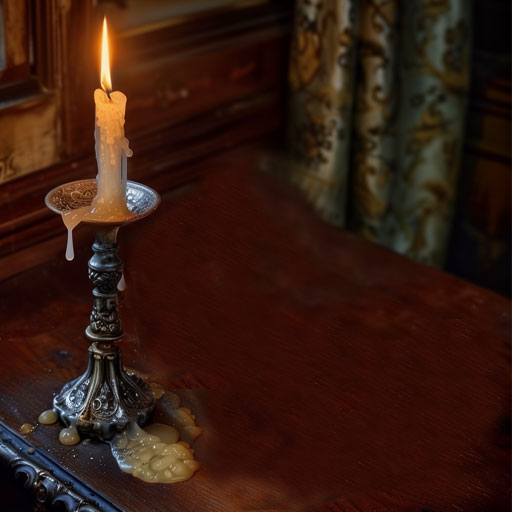
The imperceptible dying of a woman
By Harsimran Kaur
The death of a woman is no different from a man; it comes to both without folly. It’s not prejudiced; neither does it vociferously march along holding a placard of who will be coveted first; a man or a woman. Neither does it slip in error; it’s not that the ‘Yamraj’ (the messenger of death) arrogantly prods its fingers through the sheets of our ‘karmas’, conspiring of who dies first. Death doesn’t phlox a man to be the mainspring, and neither wishes to grant him any impunity, though, the life of a man is lead in usurping the vitality of a woman. Death, in any case, even with no case at all, defies the blitzkrieg of such assaults; and now that a man and a woman are alike facing death, I may ask why life makes her drown in a soliloquy of deepest regrets; stymied then she must? Of, what is then left of her? Still in weight with no mobility; do I see death nearby?
Death is a truth, abyssal, where are deepest fears and our inflamed judgments come to an end, not by virtue as death is not a virtue, but a decree of the supreme being, disempowering both man and woman of the pleasures of living if life has been a pleasure, and if it has not been, death doesn’t give another day to find pleasure, and one may leave this world with displeasures. If death were a subterfuge, still the stormeth of human denial of its vulnerability blows a pompous staccato of an ego-driven liability.
Now, if I may appear to be clairvoyant to you, I see myself staged on the pyre of death like a lamprey, and as a woman, now that I cannot be dissuaded by the temporal power of a man, I gloriously embrace death. If now I were to look back and what I have left behind, I would like to talk about it because if death makes me unequivocally an equal participant in its schadenfreude, why life, which I lead before death, distilled me in fragments of inequality?
I am humbly laid down on the wooden logs. What an irony! It’s straight from the soft-cushioning mattress to the corrugated hard make-shift arrangement. The spine is sore, though, it has already lost a lot of weight. It is like a thin stick that can contort any moment.
But, now I am dead, the study of spine, a dilettante. They, I mean the men; my husband, brothers and friends who have lifted me; I will miss them, but coming back to these men, they have lifted me finally, and not lofted which they are so used to. I have been kept on the stiff pile of wood, rifting my body as if routing a grove. Their spine looks intact; what is not intact is the affection. In dismay and depravity, they scale their emotions; they stand and then sift a bit to the other side, callously prompt the feet to be erect but it swaddles again. The posture is now ropy, in rout; the spine is defragmented among ambulatory grief.
I am wearing a sari that is red because I have died married; the antithesis of it would have made me look like a white cloud, all white. I don’t see myself dying a widow, because lonely as life has been, with widowhood under cultural consanguinity, loneliness will clomp to be the shrewd benefactor to the already lonely life.
Is woman ever spared a contrite, and how contemptuous of me to think of dying not as a widow? To even think of dying, I would be a scourge to the many left behind, and if it is blasphemous to think about death; one’s own, then life should have been more mellifluous. To say I did not sing in celerity, of emancipation, would be a snide, but when I cleared the throat noisily, I was labeled as an iconoclast. Through death, I see what I could not when I was alive.
I look at my husband, if there are any subtleties to pick on? I may not be physically present to see a man’s loneliness, please remember I am portraying to be dead, and if that man is my husband, but discover must a woman, of a man who is a widow; will he rail the black holes with superintending rhetoric in or palliative remorse?
I look at my husband who supposedly is in grief. But then I reflect momentarily if his life will stop reckoning in my absence? What about his morning tea; who will serve him? Do you think I am acting puerile? Wasn’t tea meant to immure; I remember those days when a cup of tea was the only amusement? He demanded tea at odd times, even when the words between us were an imprecation. The tea, the ordering of it in the midst of the slighting mist, wasn’t it a slight reminder of his capriciousness? When the ignominy of health pressed hard, with a torn resolute, I made tea, for he demanded it because he was the bread earner and I was the one prevaricating around free lunches.
Therefore, I wish, one day, tea will not have a bearing, whatsoever, on the vitality of a man who sips through the tongue into the oubliette with an oscillating gaiety, and the woman sips her tea in an encumbering dysphagia. How can I forget the regurgitative belches thereafter? Why to blame the tea for hyperchlorhydria when it’s the self-worth battling for a pyrrhic victory in the petulant acid? Tea will be debatable now with me not around; a new flavor and fondness will simmer.
I also bequeath our kids to him and him to his mother. His mother, standing a bit far, acquiesces to gestures of denial as if death should not have touched me; there are chores left behind, children to be married and who will tend to her old age? The ubiquitous daughter-in-law, that’s me; please hear my mother-in-law, I will be no longer present to screech caterwauls at your laborious efforts to reclaim your son, and when I was alive, how disillusioned I became to your impressionistic virtues that I lost the sanity to understand that a son will always be a son.
The boorish eyes of my husband look at me, if asking for permission to something naïve. The glory of loneliness has touched him a bit, I guess, and now for the dead woman I am lying in repose, I wish not to grant him the freedom that was obliterated from me to fasten the larger loops of domesticity, and there he stands untying the crusades of my sacrifice as if there was never a sacrifice, but a duty, now being posthumously awarded for. I hear him,
“She was a good wife, serving breakfast on time and looking after my kids, and was a wonderful host.”
The man, who is supposed to be my husband, is behaving like a braggart. I, therefore, ask now, why he does not talk about my breathlessness, the suffocation, the grotesquely amputated sentience.
Does he even remember his sardonic smile when I told him that ‘I am exhausted’, and satirized for my hypocrisy, I was; ‘what is there to do at home’, he implied?
The home, yes! the home, thereafter, became a four walled shelter only to disinter mysteries of belonging, and the woman in this bricked house; the woman who now lies dead on wooden roll, understands that a man’s world is transpired in aleatory.
There is still some time before the fire engulfs me. For one last time, I look at the coal-ridden sky, the white clouds sequestered discriminately, and all to be seen is a grey sheet of pollutants pricking the lungs to the usual wheezing and whammy. I wink! No more short breaths; when today the ‘breath’ has touched the very last chord of life and with no breath now, the tryst with the vital force a cul de sac. Is this really the end? What am I feeling? It’s an icy-cold distress; no more slugfest of frippery frissons or flinches feathering in futility. Today, I lie as a proscriptive body nobody wants to touch.
Isn’t pollution is a less enemy than a man? The prescription of Propranolol is the evidence. Today, my heart does not require the medicine; it no longer beats but there were days when arrhythmia accursed under the pericardium, decomposing the dreams of fancy and literary judgments. I felt indiscernible. But, in no admiration at all, I still caressed the puritanical patriarchal pride as if I were not a woman but a chrysalis of the dead butterfly, and now when I am no longer alive, in my testimony to freedom; I want to fly like the red butterfly leaving the exuvia.
The fluttering, of the heart; it was never a rock & roll but the man, who claimed to be my husband, flamboyantly pitched a woman with issues like a hysterical harridan vouching for rights. Even if it were true, for it was true, and I never let the heart line flattened; but then what recluse a woman has but to voice in order to silence the plague of hopeless criticism she hears from dawn to dusk under moral papilloma? The man of the house took it with disdain; he always does as if masculinity had an odor,
‘Of all the slander of being righteous has made your heart enfeebled. For what in life you need more; everything, money, kids and a loving husband should follow content. To whom you wish to show your worth to? To find glory, you may become diseased, and what about the kids’?
Now I recall lying silently, if it were a fondness or a forgery? And, if it were a trick, did it hint at reproductive chicanery? Was I being called a self-effacing woman, to let the world know the kind of prophylactic absorbent I was? How acquiescent!
So, if I become diseased, or if I were to die, why it intimidates my husband and the relatives he has hitched to for his satiability? Does he stand a fear of being exiled in loneliness, or the home that was once tenderly taken care of will capsize in the sea of disregard? I was a delight; after all, didn’t I make sure that vegetables are washed till the lines on the palm dived deep in the skin? The milk to be always boiled to perfection, the tap water checked for drinking, the plug pulled out of the socket for safety, and what more; I squandered less; saved more, and avoided the proliferation of smoking and drinking, and lived through the day in angst without certitude. If I were to describe the night, it looked like a benevolent sheet under the aegis of my protracted watchfulness, but for me, in the ambiguity of my survival, achingly painful.
Today, dead and detached, I wonder if the Earth will break under my feet or the mountains will be left without a peak or my husband will walk into the forest to chirp with the birds to ward off his loneliness. I try to be sure, in certainty, that he will not look at other women or be tempted to follow a coquette? Nothing of this would happen; he will look, sneak and may get married again. The ‘tea’ will become the crucifix on which battles will hang again. Tempest will arise from the teapot, love will be an ordeal; nothing will change, and if I were to recall, if it is so difficult for a man to be alone, why at the time, through living, I was left alone to swallow the quiet culpability of sustenance to become a domesticized woman cleaning the vulgarity of marriage?
All these thoughts; if it were hidden in the mystic of faith, the faith that arbitrarily grows in the belonging, the belonging that is never justified, and what justification we talk about when I am morally tonsured as it pleases to a man , and there is no pleasure, I emphasize, I take in his pleasing, for now it has become a conflict of morals and I march through this disgrace with apathy, for I do not require sympathy but a constructive regeneration of what is lost, because what is lost is an identity, and now I remember through the mysticism of death, can we give life another chance?
Do I hear the sound of wind brushing my hair off, one curl still scoffing out of the frontal hairline? It irritates my eye but everyone has turned spineless as they know a curmudgeon strand is of no use to be put back to the hair plait, harmoniously tucking the wayward. On top of the erratic spell of hair, the white sheet draped over me flutters a bit. Can someone re-arrange it? Not an earshot in place; why will I be heard now when I was never heard during domesticity.
The spectators, I call them for they are nothing to me more than that; I see how they attitudinize to be grief-stricken. Not everyone will be sad of my non-existence; some might not remember me at all. Those who found me humane would miss the philosophical zeitgeist of feministic pledges, and ‘praise be’ on our crusade to nip patriarchy in the implacable mud. The discussions of disquiet existence, the disquisition, of men, of their discourteous melodrama, of how we friends gathered to denounce them, dogged them of their diminution, reducing them to a skeleton and then grafting a biased anatomy of descript and devious skin over it. Now, if I may ask, if such effrontery is permissible, and if I have already committed it, which I have, it will not make me end up in exile, but protuberate inclusivity as such voices, hard and lethal, will one day act to destroy the inferno of exclusivity.
So, now when I am actually lying dead, who will take forward the scattered whims of women liberation? It’s not that I am the only one cutting a crevice, but a wife, daughter, mother leaving the world must make sure that when they are alive, that their sons are not brought up with indulgences of superfluous imagination of superiority.
Of what is the milieu when a son is born; they say he is born to rule, and rule he must to subjugate a woman, not knowing the mysteries that occupy her; one day she may open her ferocious eyes like Goddess Durga and the man is pressed under her magnanimous foot; the man so like the devil Mahishasura. Many confer, rule he must to protect the woman, not knowing that it is the man from whom she needs protection; from the intemperate, the invective he flosses on her, but the woman is no slave. My son, as I leave this world, don’t forget the mirror with which you see me; we share the same soul, the woman you marry has a soul too.
The soul, it shall depart too. I don’t have a lot of time for my departure and the priest looks at me rather inconspicuously. He starts with his rituals, his shifts are imperceptible, and after all he is acting as a middleman to connect me to the divine. He reads an elegy for my final departure. My last thoughts on death; is it freedom or acts as a deus ex machina?
It is soothing, undisturbing; not an eldritch it is supposed to be, in fact, many men around are humans in the form of ghost who insidiously put women in a psychological prison. The men I am familiar with, these men who have been a part of my life; didn’t they always talk in conceited exaggeration of disputations and disagreements? If I were to look back now, I may ask how they acquired moral asperity of adjunct sainthood where women became the submissive congregation, always ready to listen to their sermons, so dogged, and then enjoined to actualize it.
My father, when I use to live with him before marriage, had a mental block for women to be back home before dark. I asked him once, if he was being plainly chauvinistic or had a morally complex conscious? His pursuit to convince me did not go in vain as he was a charmer to let women know the shortcomings of society, and the sublimity she was required to show. He knocked in a hard tone, ‘It’s not safe in the dark’.
What is this darkness? All black or something indescribable, somewhat non-discerning or simply unfathomable? Light is awakening but dark is a conspiracy; dark is scary but light is benevolent. So, is darkness not accessible or has just become a boundary for a woman who in dark looks scared, disillusioned as if committing a blasphemy? Isn’t the soul dark too? But then what makes the soul glow? It is the continuous re-purposing of life and the ignited rebellion with the evil, and then that day when I was refused to venture in dark, in the darkness of that day when I slept, I waited all night for light to appear so that my freedom will be permissible. However, throughout the day, what I carried was the darkness of vulnerability. Of the woman I was supposed to be and the woman I am, did volition betray me?
There is something of what I wish to remember of my mother, if every mother, inconspicuously passes the legacy of accepted denials to the other woman, which is the daughter. The omelet made by my mother for my father in broad daylight had a strict time to be served, and I saw her invading the kitchen as if something needed to be conquered.
The knife erratically sliced the onions when, in probity, she might want to do something else with it? But, today, I know what she wanted to slice the knife with; to kill the ego and the pride, anachronistically distasteful, of the man, who was once my father, will always remain, and who had no idea of the amount of salt to be put in the omelet but incongruity of putting more salt than required by my mother received a verbal backlash by my father, “after years of marriage, now you should be perfect in cooking.”
And, with such impropriety, marriage becomes an incendiary issue of a woman’s identity; of who she is, a wife or a cook, or a nanny to her kids or a housekeeping woman dusting the dirt off the showpieces or a nurse tending to her husband’s fractured health when there is no one to clean her own raucous bile that comes on after the gall bladder surgery. In my lifetime, I opted to remove my gall bladder as it was a fault in the body but gradually, I realized, for the man, my husband, he thought the other way. In fact, it was a comeuppance I deserved for not taking care of my health and the pain in the upper right abdomen was transfixed as psychological.
The stories contemporaneously carry their affection and torment. There are many for a woman to look behind. Though she is distinguished in her manners to create legacies through these stories, however, in the storm of it, when it abates, there is an understanding of self that she mustn’t ignore. As she contemplates these relentless quakes that afford to defy her, in the very process she dies every day. Thus, the perfection is attainted to live again in the harmony of self, though, on the outside the acrimony continues, ad infinitum.
I am dead, though I am not supposed to be; I am prone to being self-contained, often suffocating in illusionary moribund. I am alive but I die every day, furtively; the soul is enfeebled and the body is just a corporeal mass.
But the mere thought of death, where does it come from?
Presumably it is borne out of a revolutionary mind to put an end to the domestic fascism, and if I am escaping the desecration of my essence, or have failed to protect my being, and if all this is cowardice, then I may ask how are we supposed to fight the emotional fugitive, a man is, who relegates his ego to embrace the woman he possesses and the woman who has not healed?
Who fears death, when beyond senescence there lies an afflicted body of invisible wounds, that must prevail, though only visible to a woman, that she sees often to understand that life is about endurance, of not the affliction but the precept of avenging it, which may fail often; to see it like a phantasmagoria would be a distrust, and therefore to enact the willful trust in freedom becomes the only source of liberation.
7 Responses
Your article shook me up. When I read it, I also realized that this is an absolute truth.
This is a very good opinion article.
There is a truth in this sentence which people shy away from but everyone has to suffer it.
This is a very up level article.
Thank you very much for letting us know the truth.
excellent articles
I read this article three times but still I was not satisfied. It was so interesting that my curiosity to read it kept increasing.