
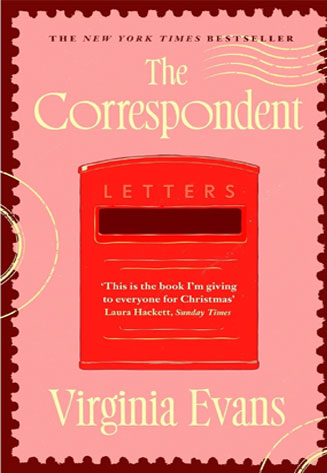
Book Review and Critique By Harsimran Kaur | Rating: 5/5
Let’s talk a bit about old age; a deficit of youth in the otherwise progressive body.
What would an old age be like?
Repulsive tantrums; I see my parents decoding life at 75 as if they have been ultimate warriors, and now when they are perfectly aligned to the present, and I must say its after fighting the terrified, inglorious battles, and in with such strained precision, they extrapolate the gains and losses; excessively repeating their worthy associations, and now meandering the corridors of their home, there is an implied monotony where such stories of defeat and victories are presented as allegories.
I am bemused by the craft of dying hair in old age. The spontaneity of such a craft, colouring those wires of vitality; I find it unnecessary indulgence, but to have time in hand, which is in abundance at this time, looks to me a soporific luxury. I am also sure that a vague foreboding must clip them if they were to die with grey hair, and if this is true, then does ‘white hair’ become a distraction? Why it is an anomaly? Has the crown become a self-pitying refinement?
Now coming back to the book,
Sybil Van Antwerp, 73, is losing her vision, and soon she may have to forgo her habit of writing letters; to her best friend, her brother, to a boy called Harry and also to the authors she admires. It has sought of become an invigorating spiral she continuously binds to, and ‘writing’ has become her only hope, and now to see ‘hope’ dying is like immanence vanishing the ‘reason’ to survive, and then to bring such a ‘hope’ back; would we call it being delusional or quixotic?
There is a grief sybil carries, of losing her son at the age of nine. And, then she finds ‘hope’ in grief. But did grief turn into a sentimental complacency or charted a way for her to not resist the quintessential reason to live? Thus, writing letters became a sine qua non. So, can we say grief is transcendent? Can we hope for grief to end one day, or the hope of ending the grief is abstract?
Let’s take a scenario where we don’t accumulate grief in its unprecedented prevalence. We don’t spill tears, and in all its contorted symbolism, it finds no reason to rescue us from our illusions that are a misrepresented reality. So, in such a scenario, or if such scenario exist, are we only looking at appropriate happiness, but wouldn’t such a scenario lose its necessary revivalism?
Profound happiness is a disease because then grief comes as a curse. Isn’t life about ascension to the higher-self? Grief is a parallel ally, always. And, then grief no longer seems awkward, awry, and this juxtaposition of grief with happiness becomes less a quandary and more a gift to understand life. Thus, writing letters by Sybil was a perfect turn from grief; to disinter the curiosity to resurrect life.
Let’s talk about grief. I always feel and have felt for all the years gone by till I could fathom the meaning of grief that it is a symphony of incorrect rhythms played on us, and why the ‘divine’ does that is a bit of an irony, and if the divine gives us bounties in plenty; in a conspiring trick, it puts us in dark melancholy. Sybil goes through the same. A prospective career hits off, she is a mother to three kids till one dies, and then there is passion, a desire of which no human should be bereft of. Sybil is not. But, vouching for a perfect life is a bedraggled mind inconspicuously weaving an internal schism.
From all the matter in the book, I also find ‘realization’ and ‘repentance’ as two different things. Sybil goes through both. In the tyranny of injustice, Sybil unmournfully, unregretfully, unhears the plea of a mother because her own bereavement of losing her son is inchoate; this is when she works as a assistant to the lawyer, Judy Downing. So, does such a grief as felt by Sybil become an intransitive sorrow? But, in spite of the inequities of life, don’t the duties, responsibilities and the mere understanding of one’s purpose become the fulfilment of life? There are gaps; will always remain. There are presumptions. There is abstract imperceptibility to lots of choices; we accept some; we decline some, but life continues.
Sybil at one point of time does make a choice to know her real family. Here, and one must without delusional rage, track the virtue of belonging.
We want to know it all, isn’t it? In the heart of heart, we know we are all culprits, deserve absolution of our sins. The demons inside us, which is our own egoistic-self, propels to do harm, and then we do, and in sympathetic urge, we pray, and in this satire of praying, we hold back what we did wrong and substantiate the reason for the wrong which is no less than controlling the wind by the fist of the hand, and in such temper we pray to know why we did wrong as if it was solely God responsible for the incorrigible. But, to our utter chagrin, the answers are always ambiguous. God does not speak but our foolish vanities make-up the predictabilities in imagination. If such were the case, will sybil be able to disperse the dust in the hailstorm; a hailstorm where the abstruse sense of belonging gets diminished?
‘The Correspondent’ by Virginia Evans is a magnifying glass into the life of Sybil. What she writes, her correspondence are not just letters of words, but letters spiking associations. It is an esoteric understanding of life because life is what we make, what we live, what lapsed and what we are supposed to live. In the sentimental apostasy, in the shredded, shrunken, in the trepidation, in the cast of violation; this life lived by Sybil, and when she writes, one sees the words as a self-reflection, preponderant of the glory and the acrimony.
The span of ten years of writing by Sybil, one sees a change in perception & critique, there is a pulverized criticism & disgust; and this disgust is of loss and more of a deepened agreeability to the primordial. She gradually becomes sober. There is heightened vulnerability, though we see many relationships of Sybil finding a cul-de-sac and the bitter remorse of the disoriented past taking over. A catharsis, so lofty, ripples the equation between Sybil and her daughter. Can she endure, or one day the story of such a prolapse of the mutilated layover of such a relationship will be dispelled off falsehood with words?
Is Sybil trying through her words to conciliate to Isolation, and in such loneliness, does contemplation become a companion?
The book is thus about ‘hope’. It’s about the personified youth gradually swallowed by the unbelievability of such prudence that it slowly magnifies the relentless pursuit to meet the end. Sybil reads; reads a lot, and through such correspondence with her best friend to talk about the books read brings out the core pleasure of reading. And here I may sound as a determinist of recovery from distraught, all through reading.
Now the question is why reading becomes important not only during youthful frenzy but during old-age as well. Isn’t it a testimony to one’s own life whaled across pits & pillaging; the rebounds & rebuff, and then one becomes a fugitive? To read is to hold silent conversations with the words as if they are our memories trapped in a black ink. And then there is an end, and whatever the end is, the string continues in the isolated impressions and we often question if a part of the story ricocheted a resemblance to ordinary life?
Sybil needs to fight the perceptibility of the people around. A deluge of unreasonable dampness of wit engulfs her. What would a 73-year-old woman on the verge of seeing all blank, will provoke in her associations, and would her loyalty to herself, her identity be forsaken by the self-styled deception of such people?
So, all through the years, and now when the end is near, what is left is the fragility of the broken arms, the disembodied fractures, and noticeable quite often, is the dislocated sacrum creaming the apothegm of grief. Doesn’t the physicality unrhyme the poetic parlance; it becomes an impropriety by the young, but I still in my surreal objectivism, find old-age going through a sentimental synapse and intellectual passivity?
Isn’t, old-age, therefore more of a psychological quarantine?
Isn’t old-age full of imaginations? One imagines, and in such imaginations, there are contradictions assessing how life has been in retrospect, and with the years left, what can one do with it. It is interesting because there is nothing more interesting than dissecting life that has presented itself in varied dimensions but still remains abstract, and such life filled with ubiquitous phantasm; doesn’t it relieve one of boredom?
Sybil worries about her blindness, the man stalking her and her moribund routine, and if life could through pleasure again at this age, it too becomes a worry as Sybil feels obliged, yet dubious to enter a new relationship, and such a age, I must say nothing is pellucid, and then Sybil too finds the entire re-living stratagem a faux pass, a gormless preoccupation but still revisits, and is glad in the end, that she revisited the concretized complexity. But all this does grind her chest, and what comes next is a reckless pillage of scrutiny of ‘what if’s’, and obliquely serrating the disaster that may strike, but isn’t reality a deterministic, a necessitated ritual? Imagination gradually loses its significance. The arrest of such impressionism brings Sybil closer to reality.
What the book tells about life?
Life gets meaning when correspondence happens. Life, its prominence beckons the need to introspect, reflect, and the interaction of such push & pull deepens sanity, which otherwise takes no time to perish.
The exchange of correspondence by Sybil; what does it signify?
The letters, the words are heroic as if they have won a battle, and explain their hunger, written vividly, and how sentimental these words become at such a victory. It’s astonishing that words can be resistant to meaning; in fact, they carry a symbolism of their own. The words, the letters, such correspondence is a naked arrangement of one’s life, radicalized by life itself.
One word to describe the book,
INSPIRING…
2 Responses
I’m loving all these posts that are hot takes! I haven’t read this one yet. People need to learn reading is subjective
This is a wonderful book review, thank you for it.