
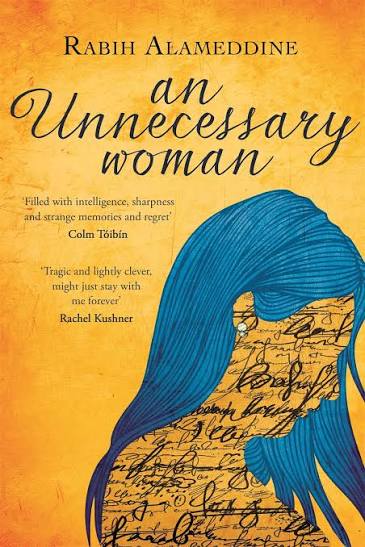
Book Review By Harsimran Kaur | Rating: 4/5
There is something persistent in life; in my life, your life that we live by innocuously, even if the invader that life is, sucks the fermented blood of the penetrating skin ridged in conceited folds of idiosyncratic reasoning and observation. To live on such persistency and these marked systemized value systems; doesn’t it make tasks seem unnecessary? There is bound to be conflict but then to stay with such relentless fiefdom is in fact a pleasure, and often helps to remove isolation; and this loneliness is sensed more around people who live life with demarcated analogies. But Aaliya is not like them. She is neither different because her needs are similar but she feeds on reflective symbolism.
Then, doesn’t it become essential to emotionally belong to our life stories where the unnecessary becomes ‘essential’ because there is pride too in narrative integration where one’s character builds on wholeness? And, what was once an unnecessary story of our life dissolved in visions & memories, is in fact the ‘truth’ of our belonging.
Now, can we ever erase these patterns that we live by so differently from others? Why there is a need to? If we were to see our aging; the very fact of freckles appearing on our face, and then to glance at the mirror, and in the process of stiffening our skin we realize that these creases are here to stay. Similar are the memories we have lived; nothing can be erased. Similar is the true calling of the ‘present’ and similar is the vulnerability of the ‘future’. We live with these patterns, as unnecessary it may seem, because it is our story.
My story, your story and Aaliya’s story! What is a story of life? Is it a normal event full of eccentricities and piquancy? Is it a guarded parade of experiences or an onslaught of conflict, and if it is a moral dilemma, why we get stiffened by casuistries? What about reasoning and reflection? Why to lead life with a vague foreboding? It is also led in isolated determinism to carry on with one’s belief of restorative survival.
How is Aaliya different?
It has always been a contemplative journey for her. This is how Aaliya addresses life; attentive to the sonorous beats of her heart and the pulsating decline of her physical strength yet capitulates to the past affections as if it were holding her like inflorescence to a peduncle.
So, why is she the unnecessary woman? Just because she is riddle to many carrying the weight of an unchaperoned daughter or a ‘left-wing’ wife with s strict moral acumen. She is not bad but hates to be good. She acts oblivious to the mirror around her; its deceiving, and then one may infer from such a pattern that is ‘characterisation’ a gossamer, gnarled in gullibility?
So, who is Aaliya?
She is a translator; a translator of translation with no publication actually to her credit. Many times, reading and interpreting the idiosyncratic opinions of other authors is liberating. The writings become a refuge of unspoken words; the precision with which it is written reasons the rhythm of one’s own life. Aaliya is perhaps disinterring her own emotions through such restraint. One may call all this unnecessary. One may say she is separated from the necessary spiralling of life. But what is necessary for others to rely on, maybe is an imposed loyalty for Aaliya. Literature releases her from the deceiving patrolling of make-believers. She is persistent in her writing symbolism; a sine qua non to belong to the incessant story of evanescence.
Rabih Alameddine intrusively aligns Aaliya to every aspect of life that has either knocked her out or made her self-obsessed or tied her to relationships. She is surrounded by stories; the forbidding soul-sigh of a mother trailing on an empty basket, the fracas around the neighbouring three witches resulting in a fortissimo and the pleasing friendship with Hannah whose death is an answer to life’s treacherous impropriety.
Surprisingly, there is distortion around sleep; and I must explain what is sleep to her. It’s an unnecessary intersection with darkness or a long conversation with death. To delve deeper into her mind, grief becomes a misbegotten privacy around the conscious that now lives in disarray. The characteristic of loneliness is amusing. Is it a putrid eldritch or an adventure; she pursues to further analyse it.
She is a soloist; so, does she believe that when life brings you down, you get up with your own two legs. That’s a fact and she prefers to live with it. She is different and she knows it. She quotes Henri Matisse,
“It has bothered me all my life that I did not paint like everyone else.”
She is not a painter but still carries the same notion.
What I loved about the book?
It carries a vision of the past imperturbably woven in the present with no apologies. Rabih Alameddine is beautiful in her parlance and exquisitely manifests the ornamental lives by different writers to validate Aaliyah’s connection to this world.
Aaliyah’s translation discipline is in fact reflection. Her translation of Austerlitz by W.G. Sebald is a reminiscent of Hannah’s predilection and answers her quest of grief. If grief is unsurmountable or nor, in this context, she is quick to quote Rilke’s ‘Sonnets to Orpheus’,
“Even trees you planted as children
Long since grew too heavily, you could not sustain them”
For Aaliyah, why anything should be unnecessary when life depends on ascertainity. Memories cannot be unnecessary and so cannot be the vision. Visiting museums of the past are necessary steps to acquaint the mind to the anachronisms. Similarly, would giving alms to the poor be a conscious indulgence? If yes, then why one would regard it an unnecessary?
So, there is nothing unnecessary about her.
What she does; how she behaves and her own illuminated path to discern the mysteries of life are not a debt but a relevant hope of certainty that life exists beyond the moral compass. These experiences are thus an esoteric need to reflect on life, to reason out the inadequacies and the battlements. She translates other work because it is a ‘purpose’ to live. Many may refrain from commenting on such a behaviour or such useless time occupancy may be contemptible to many but for Aaliyah, it’s a refuge. The outcome is the refined discipline of the mind to be contemplative.
Aaliyah, the unnecessary woman’ tells her story to finally have the courage to change the ‘ordinary’ into ‘extra-ordinary’.