
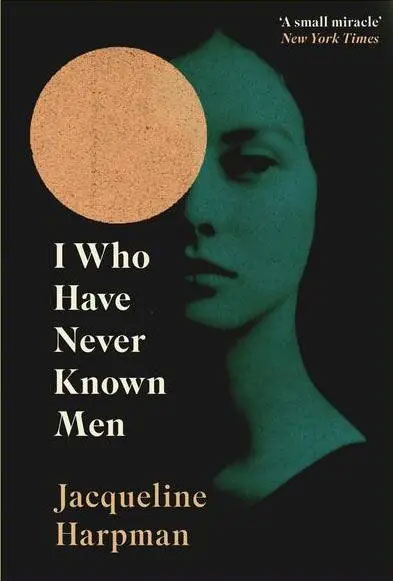
Book Review and Critique By Harsimran Kaur | Rating: 5/5
The narrator along with 39 other women are imprisoned inside a bunker, oblivious to their reason for captivity. She is twelve years old. The women are not allowed to touch each other as if touching will uncover the lofty secret of reliability. There are no men to be seen except the guards.
The narrator who is the youngest has been told by the other women that she will die last. She is still grasping with the idea of loneliness which would one day consume her but as of now she has hidden a secret; the temptation she feels, the arousal and the revisiting phantasmagoria of being intimate with the guard, and it’s a secret she wishes to tell no one.
What one sees in the prison is despondency. Time has become stagnant as if it has been reduced to a chimera. The whips & the blows of the guards are temporary but what is real is the solitude, the wounded obscenities & the conspiring darkness. They have thought of suicides but have been unsuccessful; still the thought leaves them not of such a plight. And, I now think why would someone resort to such brutality?
- Is it an importunate desire of the Gods to desecrate the humans to a level of incontinent grief?
- Or, there is a sclerotic mind behind such tyranny, so brutal to make the experience of living an imprecation, and if that is the case, isn’t ‘life’ full of sadistic vigilance? A malignant voyeurism…
- Can impenitence take over when human lives are devalued, fermented around the four walls? How can we call it a virtue worthy of applause? If the entire privilege to be a human is aleatory, and then can I say that suffering, shame & regret is a hysterical complacency?
- Or, is it a schadenfreude at the expense of an all-pervading wisdom & suffering?
But all these women carry pain; unknowable, unfathomable. I have heard, there is pleasure in pain. Isn’t it a bonded pleasure because pain brings one close to the crafted restraint to bear such a pain, and the evolvement that happens next; to repair, to redefine is a invasive power to redirect pain into a conscious awareness of a silent heuristic of ‘becoming’. How uncontrollably we all reimagine pain through memory. And here I must say,
“Remembering is a process. To recollect brings a shift in perspective.”
So, what does this pain bring to them? There is debility, enfeebleness, rage, boredom and set of inquiry amongst themselves to relieve their hopelessness. However, when they are out of the prison, they experience a unobvious camaraderie because such characteristic expression was missing inside and now it blurs in unison; there is a vitality, an opening up of a stem to clear blockages and allow a free flow of nutrients, water.
So, does ‘freedom’ inspire?
Does ‘freedom’ swallow the inequities, and a profound impulse takes over the see the truth in its faith?
There is a time in the cage when the narrator experiments this ‘freedom’. Relentlessly, incessantly, she wants to stare at the guard to make him lose his composure. So, can I say that even in the despair of captivity, the ‘desire’, the ‘freedom to act’ through the physical narrative of our bodies is still ethereal; is still a sustainable intimacy?
So, three things work closely in the prison, and I must delve deeper because we fail in our ‘eternal realities’ to ponder over them.
The narrator wants to learn; caged is no impediment. Learning must be a profound experience to reason the shifts, the dynamics, and not merely acceptance of knowledge. She holds her grasp through the convergence of time and hours to understand how their life clock works. She has the intention, the curiousness to cross over the edge. She removes the fatigue with a requisite desire to act, and such actions make one familiar with self, and such familiarity is often ignored.
And, here a take on human conscious is a must. The ‘familiar’ is knowing of the sub-conscious that lies inadequate, but in the extra-ordinary pursuit to direct us, our actions that are consciously driven are in fact the spiritedly learning of matters, of experiences lying fully ignorant in the depths of sub-conscious. They suffer a death of subliminal perception and the lack of proximity is in fact a de optimized conscious. That narrator has now opened a gate to her sub-conscious mind.
There also comes a time when these women speak about their past. And to expound further, when you are speaking, you are not only crafting words, but thus begins the process of understanding, a process of reasoning. Then the sub-conscious driven involuntary memory rises up; you picture it, an idea floats, words then form and one picks up self-control as if it is a moment of reckoning and then we must speak to understand the precepts of humanity.
The third point reasons that inspite of staying in captivity for so long, these exhibit emotions strongly; of jealousy, discontentment, of fear, anger, a hierarchical obedience, which shows that dormancy will not make you lose the natural propensity to alert, to respond.
As states earlier, the narrator now keeps track of time. She gradually realizes that time is relevant, and to know it significance helps to interpret the mysteries. She now knows that for them the day is less than 24 hours. But the delusional imprisonment that they are surrounded by has no efficacy of time. They imagine to be ‘real’ but is ‘real’ is beyond comprehension because there is not even a mirror to reconcile their past with, thus they live dispassionately, and look at each other is another story, another life can be built.
What I like about the narrator is that she is resolute, is ambitious to know the reason for the dilemmas, her obscurity & to find answers to the obfuscated truth of being in captivity with 39 other women. So, when the guards are no longer to be seen and have vanished like a callous storm with no more in hindsight, now these women start believing in the radical freedom, and use their once distorted wisdom to restart a life once buried in ignominy.
It seems like to rehabilitate. It seems like to forgo the reality once lived, and if the one supposed to live now is an illusion, a fantasy and when ‘reality’ of the past gets deep-rooted, then to come out of it clean is difficult; it’s like a sharp beam of light killing in the darkness of the eye. To start to know the self again is not easy.
Will this new life be filled with ‘hope’ or would remain forbidden?
‘I Who Have Never Known Men’ by Jacqueline Harpman is hypnotical, a dark story that changes the entire idea of living. Today, we all live with ornamental luxuries, medical facilities, generosity, companionship, love & belonging, and all this a chosen reality. But what about life never lived? Is it merely an illusion to exist as a form of becoming, resting elsewhere? Or are we looking at contrafactual existence, or at potentiality?
Out of the cage, in the open, they find an unassuming freedom. They get hold of a matchstick to ignite the pots of food. There is an enclosed toilet which is relief & more than that there see in themselves a vigour, courage, an approving liaison amongst each other to carry on the journey further. Then they build houses, mix the weeds with the mortar for the furniture, and then they go on to build villages that shows the human acumen to survive in any of the circumstances. Even if it is not always implied, it is a matter of sustenance.
The incomprehensibility, the infinity, then no longer matters.
But what matters for the narrator is the will to live. The human mind is in fact mysterious. In its eccentricity, often lies a rationale, a performative contradiction, a perspicacity to leave the uneasy, uncanny behind & venture for something liberating. And I feel all this is no a game but mindfulness, and it is not always about victory but the intuitive spirit to grasp knowledge, and such unassuming belonging is in fact a true win.
As the narrator pompously states,
“They taught me the rules but I never became a good player because I couldn’t see the point of winning a game.”
The narrator who is not aware of what dancing is; what it is to have children and to show affection or to grace sentiments has an intellectual capacity of her own. When now she is out in the landscape she has never known, she is imaginative, wants to explore. She thinks beyond the ordinary & through her own discernment & intellectual pragmatism she tries to understand existential attunement. She also sees the death of her companions. I don’t know if it would have been easy or difficult to see all of them die, and then to be alone in the conspiracy of mind, unsettled. If it would have been easy to let go and if these memories really meant something or carried a significance? The gnarled life she left and the one she is leading right now has no difference. She is still a prisoner of determinism.
So, how do we explain the idea of life finally culminating into death?
What a bargain it is, in fact, for the disgruntlement of suffering. And if death is an end to the suffering, then the wonderment in life to make peace with despair, distress; is it a charade or a rebellion? So, the women seek death as now no purpose is life, and all this does it amount to trying to magnetize life; this life of self-deception?
To simply it, we remain morally disillusioned.
I have felt how the narrator feels; to be free, to be discarded, for once, from the rigged self-control, to look & behave awkward. I have tried relentlessly to be freed from the warranty to be responsible for someone. In this conformity of life, can there ever be a time, where the vague foreboding of dismissal does not bother me?
I live to see novelty of a kind, plastering me in a frisson to be dead among the living; walking through the wrecked monstrosity of dullness of people, walking so silently that their perceptibility is of no consequence, and if loneliness becomes the only pattern of life, and I am looked at like an aberration, then there is something that I must not forget that the performative grandiosity of rectitude will perish one day, and what will remain is true association.
Is the narrator able to rescue herself from her own obstinacy?
4 Responses
It is an excellent book; I have read it several times myself, and I really liked this book review. Thank you for sharing it.
This is an excellent book review; it makes one want to read it again and again. It is written very well and in a clear, clean style.
WOW,Very wonderful
It is a very good book review.