
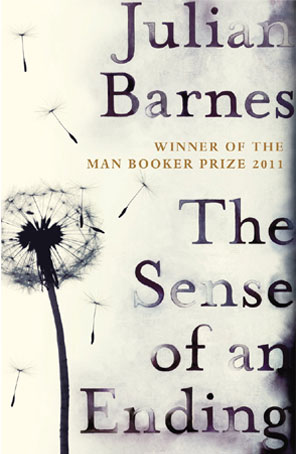
Book Review and Critique By Harsimran Kaur | Rating: 4/5
The story of our life is ambushed by a beginning & an end and somewhere in the middle, new beginnings take structure. Their endings are often muted in the isolated departures and somewhere unknowingly, the beginning & ending convulse and it is at that very moment, something extra-ordinary ricochets, and thus in our proclivity to endure, we must carry forward the beginning to the end. There are no laidback bumps in life, isn’t it?
In the ‘present’, as we look back, ‘past’ seems deceptive as if unsparing; a melodramatic chaos that seems not to settle, and this ‘past’ is so intricately woven with a beginning and an end. But, why ‘past’ is looked back reluctantly, and still to look back at it indulgently is revolting? Maybe the desire to behold the ‘past’ is an unconscious phenomenon because there is something incomplete, incomprehensible that must not be excavated but then one is always in a dilemma what if the ‘past’ remains untouched; is it justified to create barriers? Was the ‘past’ not a part of our reasoning or was it a deliberate curse? But, so often we run away from it, and in such obfuscations, we start relying on the ‘present’, its comfort, its pleasure, not knowing that the past has not vanished or submerged in the river of emaciated ripples, but is ready to pummel.
In his ‘past’ Tony Websler meets Adrian. They are two different personalities but have something in common, a kind of vigilance that they cannot keep their eyes from—Veronica. Who belongs to whom is questionable? Belonging sometimes becomes disruptive, isn’t it? What you think of the ‘other’ make your associations either patchy or progressive. If we talk about the ‘past’ of Tony and Adrian, the former is more adventurous, living the present as if it were no other, and Adrian is contemplative, extrapolating life through varied dimensions, its unnecessary revulsions that must be aligned.
In the ‘present’ Tony is now retired, and the ‘past’ had left Adrian long back. Tony is divorced now, and everything seems settled when he receives a letter of being bequeathed with a fortune. The letter is from Veronica’s mother.
Now here I must say that doesn’t it often look like the ‘past’ has an obsequious responsibility to the ‘present’? It daggles its horns right in the centre or barges in like a mad cow shuddering its skin, and BANG ON? So, there are two options. The ‘present’ can either take the ‘past’ by horns and push it to a corner where it lies in a filthy dust of conceit. Or, the ‘present’ might decide to stand awkward and the horns of the ‘past’ presses into the bulging obscurantism of the ‘present’. Now, here we see both the ‘past’ and the ‘present’; are they worthy of such recrimination?
Thus unfolds a ray of banished memories as if they were living surreptitiously inside the conscious stealing the ‘present’ propensity to be always valid. But, is ‘present’ always incommensurable? Is ‘present’ a solenoid of the Now?
What happens when this conscious present travels deep into the memories of the past that once breathed a future, and to come back to them is almost incapacitating. It is at this very moment, these memories reign in anthropomorphism, become repulsive. So, now the memory of Tony’s past – Adrian’s suicide and Veronica’s betrayal invoke a sense of realism. The letter received by Tony is an esoteric assessment of human relationships through mathematical expression that takes a perfectly co-ordinated contrapuntal between Tony & Veronica to identify the metamorphosis of life. Tony, thus, does so through the words of Adrian in the letter, to disinter that the volition to live or die is a certainty of one’s wisdom to be self-sufficient; to not consider death as an anomaly but a perspective.
Here, death needs further expanse of though…
Don’t we only think of death in oblation? Doesn’t it rise like a burgeoning shadow of an incandescent fire, ready to consume us. If now I were to call death a denouncement of life spread in times gone by, am I being distasteful? And if it were just an end, then do I must wait for it like the parched land in the soiree of nakedness waits for the wetness of the sky? Why do I see an apoplectic doubt in its occurrence; people defying all odds that makes them less susceptible to it, considering that such illusion is self-menacing, but when have humans been able to ward off self-exculpating rectitude? So, is it a constituted power of the divine or death acts as an abstract refuge for us to put an end to sufferings as per discretion?
Did Adrian die due to a perceived felicity of death?
The Present
Tony is occupied with the letter. So, when do words lose their worth? The continuity of life thus remains.
With Adrian dead and Veronica resting in the fiefdom of obstinacy, Tony springs out of his ennui to get close to the purpose he is now supposed to unveil. But all this requires a transition, from the rudimentary cluster of thoughts, atrophied, living in frightful silence to be now refined in the capacity to understand the flawed & the imperfect. So, with Tony destroying the leverage of preconceived reasoning, will he now start believing in the eclosion and not in the implied?
Now can I say that judgements prevail in the ghetto of hubris?
There is a trail of thoughts that purges our own sentimentality and believability of what lures us. Tony has held such thoughts for long, of his intrusive compartmentalization of Adrian and Veronica. Then, we also function on an identity that must not deviate. But now Tony must change his way of thinking. Isn’t there is always something forbidden on which lies the futility of judgements? There is a time that must come to break it. And, this very time, the ‘present’ when he receives the letter and then runs through a page of Adrian’s diary, he must let the ghoulish of the past sit in attendance to the present—no matter how unnerving it may seem—the collision is a must to disintegrate the voluminous baggage of psychic residue.
But are we responsible for such thoughts?
Encumbrance of such deviations from one anomaly to another aberration to then move towards an ideological adamancy becomes a part of a ‘whole’, of ‘us’, an identity. Can such train of thoughts be easily sabotaged? Isn’t it a running stream of unidentified expressions & emotions; identified once it is received, packed in the cell volume through repetitive calibrations, and then thoughts become ‘us’; a parity which is non-negotiable, though they need to be judged as another though must converge through such passage of confrontation, and there is a forbidding element to it. Thus, what are these thoughts—caravans of the ‘future’, struggling in the ‘present’ carrying the anachronistic eldritch of the ‘past’.
When Adrian meets Veronica in the ‘present’, there is in fact a state of verbal insufficiency.
When meeting someone after decades, there is an impulse to be dumb at times, like the cerebrum lies an inebriated states mixed with a daiquiri of vulnerability and self-occupancy, and somehow wisdom is prophetic; the more we are near to it, the less dumb we feel. Another thing I may ask;
To act dumb is also the wiseness; the mind that is epithetical to its surroundings.
And through such mysteries, time travels. Can youth and old age be an antagonistic? The scruffles of the youth, insipidness, the ghoulish gaffe; do we confront all this in the lethargy of greys or the fragility of such an age is preponderant imbued in accidental wisdom to not let the beguiling camouflage of youth dance frenzy? So, if Tony were now as an old hunch, to perceive the suicide of Adrian, what would be the character of such a thought—a fearless transition to alterity or would it be perfect to call it a blasphemy?
Can we also put a distinction here between self-preservation and cowardice?
The suicide note left by Adrian given a philosophical intention to ‘death’ but the letter sent by Tony to Adrian before his death is spiteful condemning of relation with his ex-girlfriend Veronica and that to know her more; of how she can be vindictive, her Veronica’s mother can provide valuable input. Tony, all his life wanted to keep it clean, not realizing that his thought process could be detrimental to Adrian’s belief system. And it was.
Instances of such have happened to you, to me, I guess to everyone where over- personification tends to some kind of vanity, over stimulation, an over-powering indulgence labelled as solipsistry. We see, therefore, meeting after years, Veronica condemns Tony’s action as cowardice when for him it is a shield of self-preservation.
Irrefutable are the actions that are immorally defunct but at the same a despicable act could be morally intriguing to the one acting intransigently.
And then we question through out the book if Adrian’s perception of ‘death’ was convincing, and for other people to consider suicide as failure to live life is appropriate?
To now look at Tony and Veronica in the ‘present’, what they carry is the savoury slice of life, its experiences; of the words spoken falling like ambiguous pleas or distorted emotions or perhaps something incorrigible or could be a correctly sewn intention. They sought out the ‘past’ through a system of beliefs lying in a personified dynamic of vested interest to uphold relationships their way. I see through Tony and Veronica when pre-conceived judgements become obligatory to protect oneself without realizing that such reasoning is about self-efficacy.
The feather falls at random at my feet. I pick it up is it’s a divine angel guiding me? I let this thought manifest a power in me to be intuitive and if this were ‘true’ or ‘false’, the intensity of such discretion, for holding such a powerful intuition makes me an accessible prophetic. I live with the thought till it makes be delusional and then I must restrict it, fear it because the value of such judgement is an occupational hazard; a reality that only belongs to me. And now I must break the barrier of incumbent darkness that surrounds my isolated shadow. And why I talk about this because the book, ‘The Sense of an Ending’ by Julian Barnes has the same generosity to explicitly, in affirmation of belief systems, resort to existential solipsism as Tony does, and to create such a expanse, his constructed reality leads him to epistemic isolation.
‘The Sense of an Ending’ is about the distorted rationale we all create for our subjective survival.
2 Responses
The book review was excellent; I would love to read more like this in the future.
it is very nice and creative book review