
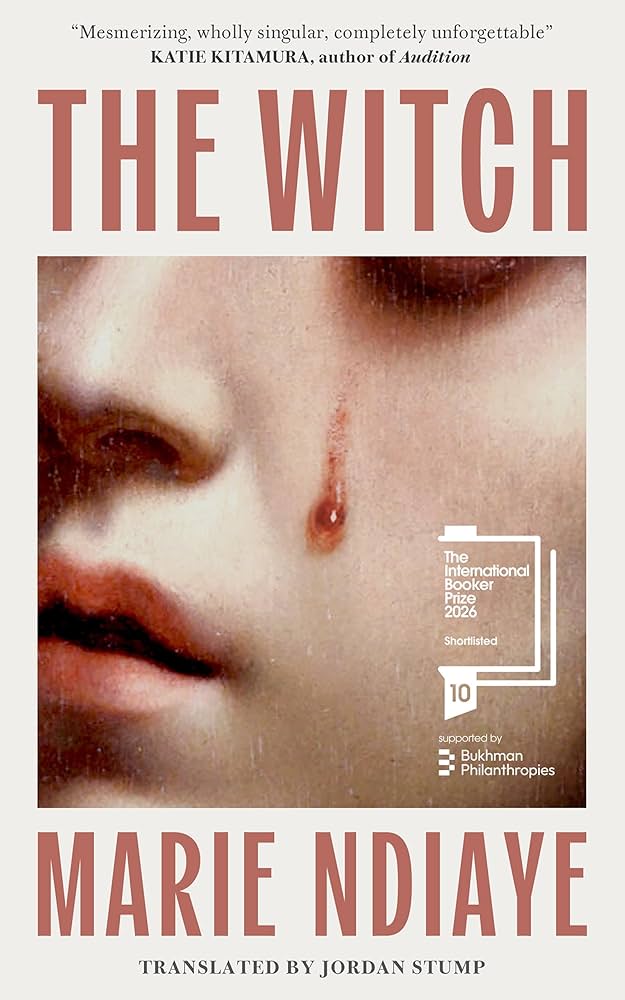
Book Review and Critique By Harsimran Kaur | Rating: 4/5
Lucie is a witch. She wants her daughters to carry further such rehearsed consanguinity of witchcraft. She tries hard but to her chagrin, there is despondency to see her daughters learn in neglect such craft of witchery. She foresees a disdain, a distortion as her daughters becomes inaccessible to her powers, and there is an abject treachery Lucie unfondly experiences as her skills lose its refinement. If it’s a comeuppance she deserves?
Such anachronistic practice of witchcraft conjures, even if inherited, an exaggerated contrivance, and now that it is confronted by her daughters with flounce, a desultory, and a visit such empirical with damp discredibility and unrefined nonchalance.
Is there any significance of such a craft? Can a witch be a contradiction to the normalcy of reasoning?
In her vague desires, the desires of the witch, its ghoulish acts of perfidy, and then the vindictive episteme made bare, and through the witches’ delusional rage and penetrating servility, can her actions be full of wonder and unpredictability?
Lucie soon is beleaguered by her witchcraft. There is less unanimity; nothing distinguished. The marvel of such perfection looks unattainable. A disruptive resonance she finds in her daughters who are obsequious to such witchery, and then the daughter Lucie is, she has been a faux pas to belong to a patronizing mother who is a tasteful witch, and to her utter chagrin, to her utter forbearance, to sail through the inequities, and to be not a witch of precision as her mother but then to see her daughters in delight flying like birds, to become birds in the exuberance of such a mystic, can I feel or actually I do feel that such rising cumulonimbus of forbidden for Lucie becomes a reason of escape to pretentious monotony?
The prosperity of blood, which I must signify, is a sentimental mystification for a witch; an essentiality that a witch must confirm to. Lucie is no different. And so are her daughters; no different. The crimson of tear becomes a perfect ascension; the indiscriminatory velocity of foretelling continues, the blood drops shamelessly, and such a scandalous act of insolence, the impropriety of witchcraft that I call; in such stern vigilance, has it become a retaliatory consolation for human depravity?
And if were to delve further,
Such defined layering of inventive intellect that witchcraft is; such overindulgence and with such undercurrent of disoriented impulses, can we say that to put witchcraft in a dystopian, compartmentalized passe is thereby questioning the sincerity of creation which for many of us still remains a mystery.
The blood of a witch, hosting the eyes, falls like a victorious tear—is it reckoning spirituality?
Witchery—so often it seems like an illusion, all black with some magical frissons, and a cauldron where the truths, pretentions and analogies are mixed together and if it were all true, this act of witchery, and we know that the mind is capable of such intentions, isn’t human solipsism at play?
Where does the ‘Divine’ stand around this performative consanguinity; this very act of witchcraft where humans become a primordial asset to its perpetuity to stay relevant?
Can witchery serve a relevant purpose, and then of what? For what?
Is it a reassurance that ‘evil’ exist or it exist for ricocheting a perception, seen or observed, or is it an aggrandizement to solve human depravity?
So, when Lucie’s daughters become birds; can we say witchery is an art?
Becoming birds, rocking feathers, spurring it delicately along the edges is a gift and then to get back to the resounding fragility of a human again is therefore an art. Contemptible as it may sound, witchery is a beatific phenomenon for the witches, and such rhetoric of abstract reasoning of witches behind the willows, a the normality of human mind and the humans who don’t bebop as witches, continue to call such conspirating audacity as devilish?
Coming back to the book, Lucie is thereafter left alone. The daughters’ fly; not looking back, and if ‘freedom’ is rampant and deserves obedience, then her daughters choose intransitive liberation.
And again, if I were to delve further, is the relationship between a mother-daughter a complex alignment of reasoning, of a bond of trust and strength, and in such perfectly structured, rhythmic, fertile irreplaceable bonhomie, can we expect an intrusion of repulsion to disrupt such a relationship through a strict permanence of identity, a character reflux of scrutiny, and now there are two different entities; the mother and a daughter, scourgely disconnected as if such impunity, now it is, and that it is a beginning of a new isolated volition?
Has it happened with you? In such misalignments, lost are the words of endearment. So, what becomes of such a relationship between a mother-daughter?
There is a sort of progression to anonymity as if one was never the other’s reflection but a mere pause. Now the daughter refuses to binge on such an exaggeration, or the case could be that the mother, in flagrant superiority, disowns the daughter if such daughter rises to obnoxity, and therefore becomes reprehensible by the mother who bore her in the obscurity of darkness.
Pierrot, Lucie’s husband, leaves her. She feels abandoned. There is a deviation, he observes, an anomaly, an aberration to the normal fundamentals of life; and the witchcraft, he finds to be imperious, incomprehensible, and an insinuating contradiction, and therefore, he leaves.
‘The Witch’ by Marie Ndiaye is a deeply penetrating wisdom into the autocratic world of a witch, who in the desperation to use her half-hatched abilities, to renounce her mind tricks insinuates a pattern of believability that in the end, and we all know, the entire charade only consumes a foolish vanity and turns out to be a meaningless verve.
A thought after reading the book…
Aren’t witches that run a roughshod over the vicissitudes of others in fact bruised by their obfuscating sentiments and their liminality? And then I may ask are they absolute in their happiness or is their happiness an imperfect solidarity to their dismantled optimism to life?
The book thus feels hypnotic. The dispersion of such esoteric words and the extra-ordinary, festooned binding of the language, procreating a sense of hypnotism as if the world is full of indelible connections, all the associations we make, we build; is it on intuition or are well-deserved? And then I must say that the immanence in the flow of such associations is obligatory, and depends on how one imagines to recuperate from such flow.
Will Lucie ever come out from the sentimental coercion of such relationships that led her to believe that morality is negotiable and that affection is circumstantial.
And, lets think, can witch ever survive around the ontology of human unsettlement?
4 Responses
excellent book review
This book review is written by a highly accomplished author; we really liked it.
All the best
Great info